Can you snorkel straight off a Bahamian beach?
Yes, and it is free, legal and often very good. This is the part most operators would rather you did not read, and it is also the part that makes the rest of the advice trustworthy.
Several beaches on New Providence and Grand Bahama have patch reef within swimming distance of the sand. Bring or hire a mask, walk in, and you will see sergeant majors, snapper, wrasse and quite possibly a ray. On a calm day it is a genuinely good hour in the water.
Which beaches, and what is actually there?
| Beach | Island | Access | What is there | Honest verdict |
|---|---|---|---|---|
| Love Beach | New Providence | Taxi west, then walk in | Patch reef offshore, the best shore reef near Nassau | The one to pick |
| Cable Beach | New Providence | Taxi or hotel frontage | Structure and fish at the western end | Convenient, busier |
| Junkanoo Beach | New Providence | Walk from the cruise wharf | Sand and swimming, little reef | A swim, not a snorkel |
| Taino Beach | Grand Bahama | Taxi from Freeport | Shallow reef patches | Quiet, worth the fare |
| Fortune Beach | Grand Bahama | Taxi from Freeport | Reef offshore, long sand | Quietest of the lot |
Conditions matter more from a beach than from a boat, because you cannot move to a sheltered stop. A breezy afternoon that a boat would simply relocate away from leaves shore snorkeling murky.
Where does the reef actually start?
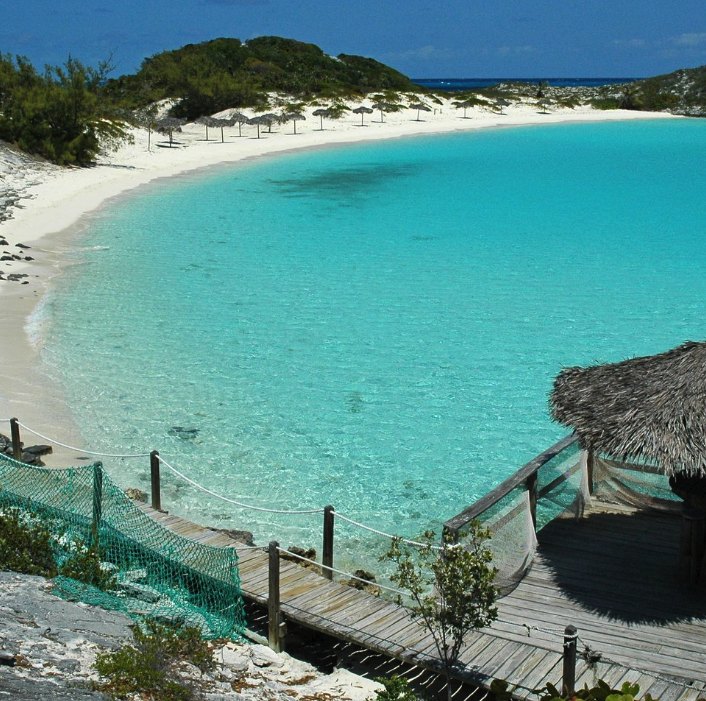
Further out than the photographs suggest. Bahamian shores are typically sand and seagrass for the first stretch, with patch reef beginning where the bottom drops to three or four metres. At Love Beach that is a comfortable swim; at most other beaches it is further than it looks.
The living outer reef — the dense coral these islands are known for — sits well beyond any sensible swim. That is not a marketing line; it is geography, and it is the single honest reason a boat exists.
Should you hire gear or bring your own?
Bring it if you can. A mask that fits is worth more than any other piece of snorkeling equipment, and hotel hire optimises for durability rather than comfort.
If you are buying locally, a basic mask-and-tube set at a resort shop costs about the same as two days of hire. Test the fit before you pay: press the mask to your face without the strap and breathe in gently through your nose. It should hold itself there. The tips page covers the rest of the kit.
Is it safe to snorkel alone here?
Do not. Not because Bahamian water is dangerous — it is warm, clear and shallow — but because every snorkeling incident anywhere is made worse by nobody noticing. A buddy is the single biggest safety factor available and it costs nothing.
Beyond that: stay inside marked swimming areas, keep well clear of boat channels, and tell someone where you are going. Carry a brightly coloured float if you have one, so anything with an engine can see you.
What about currents and boat traffic?
Current here usually runs along the shore rather than out to sea, which is manageable if you know it: swim parallel to the beach to get out of it rather than fighting straight back in. The tide moving over the banks is what carries it, so it is strongest around the change.
Boat traffic is the more realistic hazard, particularly near Cable Beach and anywhere with watersports operating. A snorkeler face-down is close to invisible from a moving hull. Stay inside the buoys.
Can you reach Rose Island independently?
Partly. Water-taxi services run to particular beach clubs on Rose Island, so it is possible to get there without booking a tour. What you are then paying is transport plus admission, on somebody else's timetable, and you arrive at a beach rather than at a reef stop.
Green Cay, Pearl Island and Athol have no public service at all. The turtle grounds are boat-only in the plainest sense: there is no route that does not involve chartering something.
Can you get to the swimming pigs on your own?
Not to the famous ones. Big Major Cay is in the Exumas, eighty miles from Nassau, and there is no scheduled service that gets you there and back in a day. A flight or a charter is the only route, whatever a search result implies.
The Nassau-area pigs live at private beach clubs on the Rose Island chain. Those clubs are commercial operations with their own admission, so “independently” still means paying somebody — usually more than a shared boat fare once the water taxi is added. The spots page sets the two pig beaches out properly.
What does Grand Bahama offer from the shore?
More than Nassau, proportionally, because there is far less traffic. Taino and Fortune beaches both have reef within reach, and the water is generally clearer for the simple reason that fewer hulls stir it up.
Lucayan National Park is worth the trip, but not with a mask: the caves are not a snorkeling site, swimming is not permitted, and Ben's Cave closes seasonally for a nursing bat colony. Go for the caves and the beach across the road — the Grand Bahama page has the detail.
What does a boat buy that a beach cannot?
Five things, and none of them is available at any price from the sand.
- The living outer reef, which is beyond swimming range.
- The turtle grounds at Green Cay, where the animals reliably are.
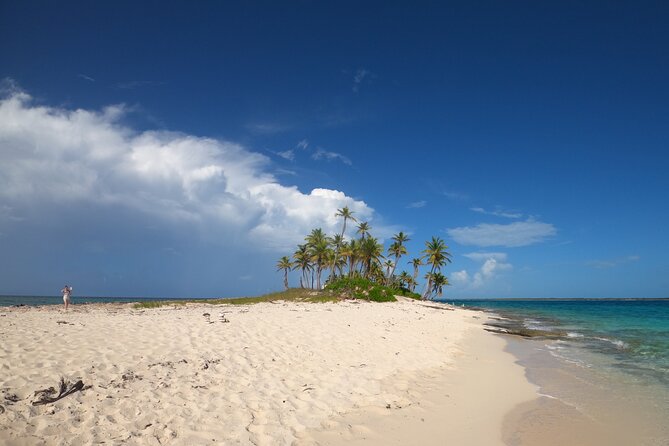
- Uninhabited cays and sandbars, which is what most people came here to stand on.
- Either pig beach.
- Somebody watching you. A crew in the water changes the day entirely for a nervous swimmer.
When is a tour genuinely the cheaper option?
More often than people expect, once the whole day is counted. Gear hire, two taxi fares and lunch bought separately land close to the cheapest half-day fare listed, and that fare adds two or three offshore stops, a crew and a refund if the weather turns.
The beach genuinely wins when you have an hour rather than a morning, when you are staying somewhere with reef offshore, and when the sea is flat. Most people on a week-long stay should do both. The prices guide works the comparison through properly.
What kit do you actually need from the beach?
Less than a shop will sell you. A mask that fits, a tube, and something on your back to stop it burning. Fins help in current and are optional in calm shallows; most shore snorkelers manage without them.
What is genuinely worth adding is a brightly coloured float or a small buoy. It gives you something to hold when you want a rest and, more importantly, it makes you visible to anything with an engine. A snorkeler face-down is close to invisible from a moving hull.
Skip the underwater camera on a first outing. Learning to clear a mask and manage a tube takes a session; adding a device you are afraid of dropping makes both harder.
How do the conditions change through the day?
Mornings are calmer and clearer, everywhere, for the same reason the boats leave early: the sea breeze builds from late morning and the chop it raises stirs sand off the bottom. A shore spot that is crystalline at eight can be merely acceptable by two.
Tide matters less here than it does on a big-tidal coast, but water moving over the banks does carry sediment. Slack water is clearest.
Practically: go early, look at the water before you commit, and if it is stirred up, come back tomorrow. From a beach that costs nothing, which is the one genuine advantage the beach has over a booked departure.
What does a week of doing both look like?
For most visitors this is the right answer rather than choosing. One booked boat day covers the offshore reef, the turtle grounds and whichever pigs you have decided on — the things no amount of swimming from a beach will reach.
Around it, two or three beach sessions cost nothing beyond the gear you already brought. They are also where you get comfortable: an hour at Love Beach before your boat day is the best possible preparation for someone who has not snorkeled before.
Book the boat day early, because the small-capacity departures fill first and the 24-hour refund window means an early booking commits you to nothing at all.
The rules: coral, conch and sunscreen
- Do not stand on coral. One footprint kills decades of growth and cuts you badly.
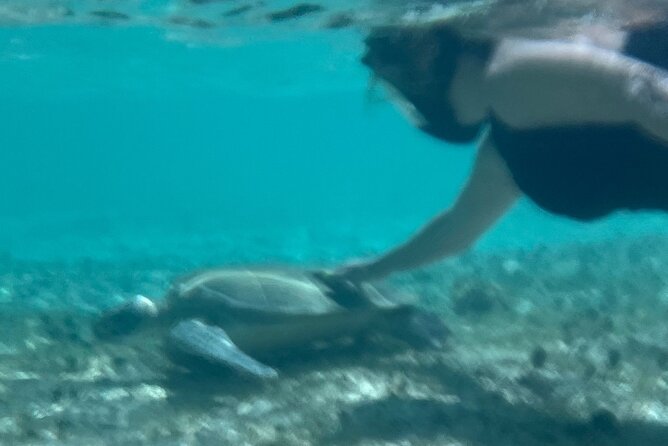
- Do not touch turtles or rays. Protected species, and touching strips the mucus layer that protects them.
- Do not take live conch or an occupied shell. Queen conch is regulated, and shells are confiscated at plenty of borders.
- Use a mineral sunscreen, applied at the hotel rather than at the water's edge.
- Do not feed the fish. It wrecks their gut and teaches a reef to mob swimmers.
Frequently asked questions
Is shore snorkeling in Nassau any good?
Do I need a permit?
Can I hire gear by the day?
What is the one thing people get wrong?
What only a boat reaches
If the honest verdict above pushed you towards a boat, these three reach the water you cannot swim out to.