What actually differs between these boats?
Almost nothing you would guess. The reefs are shared: the same handful of cays east of Nassau carry most of the departures, and two boats at the same price usually stop at overlapping water. What separates them is the hull, the number of people on it, how long the day runs and how much of the day is already paid for.
Sort the options on those four things and the choice becomes obvious in about a minute. Sort them on price alone and you will end up on the wrong boat at the right fare.
Catamaran, powerboat, sailboat or kayak?
Four hull types work this water and they produce genuinely different days.
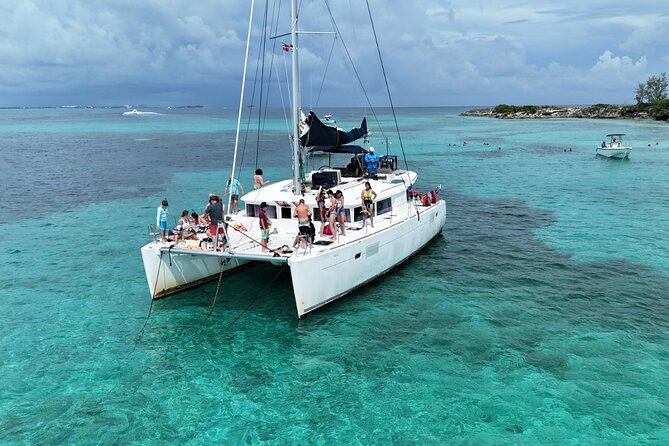
A catamaran sits on two hulls, so it rolls very little and bounces less. It is wide enough for shade, a washroom and an upper deck, and it is slow. That combination makes it the right choice for anyone who is unsure about the sea, travelling with young children, or who wants to sit down properly between stops.
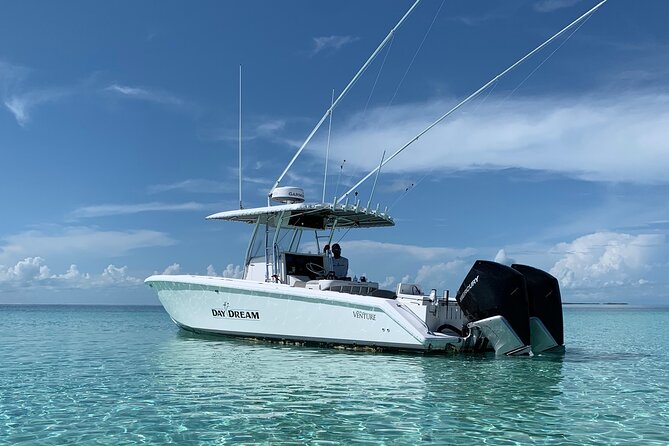
A powerboat gets you to more stops in less time. On a four-hour trip that difference is real: three cays instead of two, and an hour in the water at the best of them. The cost is comfort, shade and usually a toilet.
A sailboat promises the most romantic version and, on the Nassau runs, frequently motors both ways because the schedule does not allow for wind. Travellers notice, and say so.
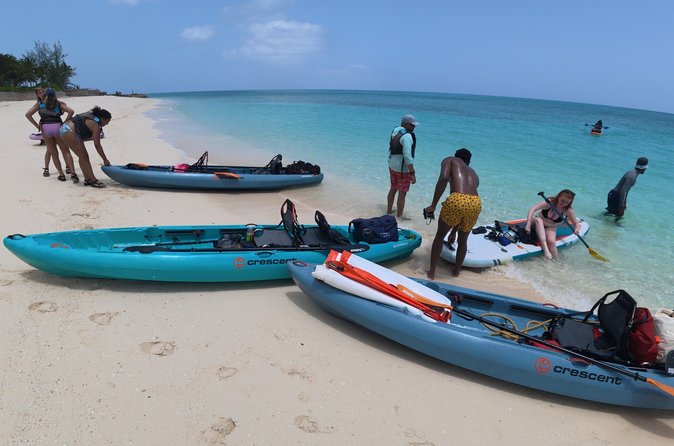
A kayak is not a compromise version of a boat. It is a different activity: you paddle out to a platform moored beside the reef, which is quiet, physical and completely uncrowded.
| Hull | Typical cap | Length | Food and drink | Best for |
|---|---|---|---|---|
| Catamaran | 30–60 | 4–5½ hours | Often lunch and an open bar | Comfort, shade, families |
| Powerboat | 15–30 | 3–4 hours | Sometimes lunch, often a beach bar | Covering the most reef |
| Sailboat | Up to 50 | 3½ hours | Open bar, no food | A short sail with a drink |
| Kayak | 6 | 3 hours | One drink and a coconut | Small groups, quiet water |
| Private charter | Your party | 4–8 hours | Bring your own | Four or more travelling together |
How many stops is too many?
Three is the practical ceiling for a four-hour trip and it is the shape most of the popular departures use: reef, turtles, beach. A fourth stop starts eating the time at the other three, and the transit is where a day quietly disappears.
Read the in-water time rather than the stop count. A trip advertising three stops with twenty minutes at each is a worse morning than one with a single hour-long reef stop and a long beach afterwards. The listings that state minutes per stop are telling you something the ones that do not are avoiding.
What does “small group” actually mean here?
Anything from six to sixty, because the phrase is unregulated. The number worth having is the stated cap, and it varies far more than the language does: a cap of six on one kayak trip, ten on the sea-scooter day and the fly-in, thirty on the catamaran, sixty on the largest shared boats.
Ten or under changes the day materially. It is the difference between a guide who is with you in the water and a crew member counting heads from the swim platform. Above about thirty you are on a party boat, which is a perfectly good thing to be on if that is what you wanted.
Is a private charter worth it, and from how many people?
Four, roughly. Private charters here are priced for the vessel rather than the seat, which changes the arithmetic completely once a group is involved.
| Party size | Smallest charter, per person | Shared boat, per person | Verdict |
|---|---|---|---|
| 2 | About $484 | $120–$150 | A luxury |
| 4 | About $242 | $120–$150 | Close, and you get the itinerary |
| 6 | About $161 | $120–$150 | Competitive, and the boat is yours |
| 6, larger boat | About $174 | $120–$150 | Steadier hull for about the same |
What the charter buys beyond the price is control: your own start time, your own stops, and a captain shaping the day around whether your party wants to fish, snorkel or lie on a sandbar. For a family with a nervous swimmer it is worth more than the numbers suggest. The prices guide works the bands through in more detail.
Does lunch included actually save you money?
Usually, and it saves more time than money. Food at a Bahamian beach club is priced for a captive audience, and the queue at midday on a busy stop is real. A fare with lunch in it typically runs twenty to thirty dollars above one without, which is roughly what you would spend anyway.
The catch is what lunch means. Boat lunches here lean towards chicken, rice and salad, cooked aboard on the better catamarans and delivered cold on some of the cheaper runs. If anyone in your party is a fussy eater, carry something regardless of what the fare covers.
What does an open bar do to a snorkeling day?
It changes who is on the boat. The departures with unlimited rum punch attract a different crowd from the ones with bottled water and a cooler, and the reviews reflect it in both directions — delight from groups, irritation from families who did not expect it.
Practically: drink after the snorkeling rather than before, because alcohol and cold water are a poor combination and crews will refuse anyone visibly impaired. The bar on most of these boats opens on the return leg for exactly that reason.
Are sea scooters and underwater scooters worth it?
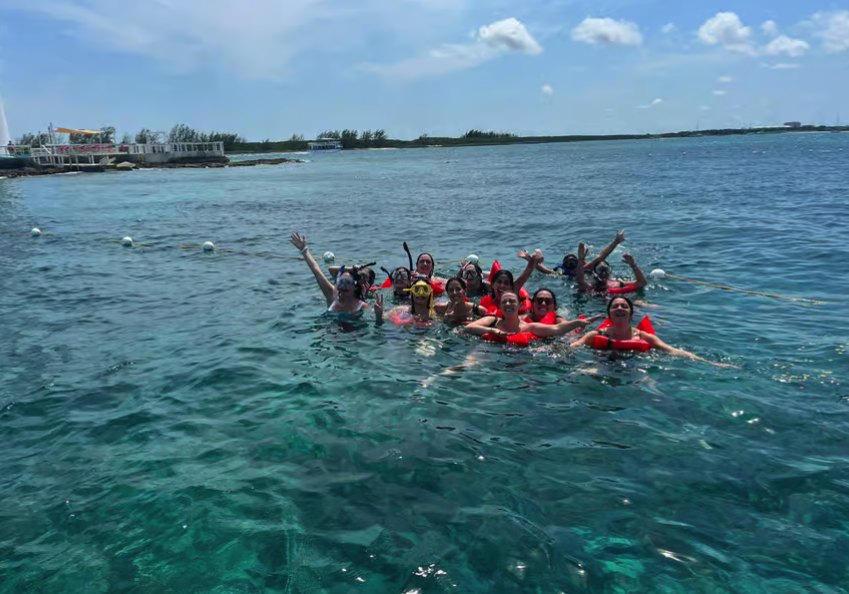
Genuinely, yes, and for a specific reason rather than novelty. A handheld propeller removes the effort of finning, which is the thing that tires people out and ends a stop early. Anyone who is unfit, nervous, or simply new to snorkeling gets a materially better hour with one.
A confident swimmer gains less. If everyone in your party swims comfortably, spend the difference on time in the water instead.
Which departures include the pigs in the fare?
This is the most common billing surprise. Some fares include the pig stop outright, one charges US$30.00 per person for the interaction as an add-on, and several visit a beach where the pigs are simply present.
Worth saying again, because it dwarfs the fare question: the Nassau pigs and the Exuma pigs at Big Major Cay are different places eighty miles apart, and only the fly-in day reaches the famous one. The snorkeling spots page sets both out.
Does a 5.0 rating beat a 4.3?
Not by itself. A 5.0 from thirty reviews is a much weaker signal than a 4.3 from three thousand, because thirty reviews is a good month rather than a track record. Volume tells you the operator runs consistently; the score tells you how it goes when it runs.
Read the low reviews rather than the average. On these trips the criticism lands tightly on three things — short time in the water, transfers that were not included, and a worn reef stop — and all three are visible on the listing before you book.
Which boats have shade and a toilet?
The catamarans, generally, and the larger private charters. The powerboats and the sailboat vary, the kayak trip has neither, and the listings state it where it exists. It is a four-hour question on a two-hour boat and a deciding question on a five-and-a-half-hour one.
With children, in the middle of the day, in Bahamian sun, treat shade as the first filter rather than a nice-to-have.
How long should the day be?
Three hours is a stop and a beach. Four hours is the shape most people want: two or three stops with real time at each, back by early afternoon. Five and a half hours is a proper day out and needs to be treated as one — it is the whole morning and some of the afternoon.
Six hours on Grand Bahama is a different proposition again, because a slice of it is driving between places on a spread-out island rather than sitting on a boat. That is not padding; the island commentary between stops is one of the most-praised parts of that day. It is simply worth knowing before you compare it against a four-hour Nassau run on length alone.
The number that actually matters is not the total. It is the in-water time, and the listings that state it per stop are telling you something the ones that do not are avoiding.
Does hotel pick-up change which boat you should take?
More than people expect, particularly on Grand Bahama. Nassau is compact and a taxi to any of the docks is short, so pick-up is a convenience. Grand Bahama is spread out and taxis are the only way around, so pick-up is closer to essential.
Three arrangements exist and the listings distinguish between them: included in the fare, offered as a paid option at checkout, or not available at all. The middle one catches the most people, because a booking made without ticking the box arrives with a meeting point and no transport.
Where you are paying for it either way, a fare with transfers built in is usually cheaper than two taxis and always simpler. Where the dock is a walk from your ship or your hotel, it is money for nothing.
What about the gear you bring yourself?
Every trip listed supplies mask, fins, tube and vest, so nothing is compulsory. The one item worth carrying is your own mask, because fit decides comfort and operator kit is chosen for durability rather than for your face.
Test any mask before you commit to a day with it: press it to your face without the strap and breathe in gently through your nose. It should stay there on its own. A mask that fails that test will leak for four hours and there is nothing to be done about it at sea.
Beyond that, a rash guard and reef-safe sunscreen do more for a snorkeling day than any equipment upgrade. The tips page covers the whole list.
Who should book something else entirely?
Three groups. Anyone whose reason for coming is the Exuma pigs should book the fly-in day and nothing else — no Nassau boat reaches Big Major Cay. Anyone staying in Freeport should look only at the Grand Bahama departures, because the islands are not connected in a way that works in a day. Anyone who wants to dive is in the wrong place altogether: every trip here is surface snorkeling, and Bahamian dive operators run separately.
Everything else is a matter of matching the day you have to the boat that fits it. Bahamas Snorkeling Tours sets every departure side by side on exactly the four variables above.
Frequently asked questions
Which boat is best for seasickness?
Can I snorkel if I cannot swim well?
Do I have to snorkel at every stop?
How far in advance should I book?
One boat of each shape
One of each shape discussed above: the steadiest boat, the smallest group, and a vessel chartered for your party alone.