When is the best time to snorkel in the Bahamas?
April to June, if you want one answer. The water has warmed through, the seas are settled, the winter cruise crowds have thinned and the storm season has not started. It is the shortest queue and the calmest morning you will get.
That said, this is a year-round destination in a way most snorkeling destinations are not. The sea never drops out of a comfortable range, and there is no month in which the boats stop running.
How warm is the water, month by month?
| Month | Sea temperature | Visibility | Crowd | Cancellation risk |
|---|---|---|---|---|
| January | 24–25°C | Very good | Busy | Cold fronts |
| February | 24°C | Very good | Busy | Cold fronts |
| March | 24–25°C | Very good | Busiest | Cold fronts |
| April | 25–26°C | Excellent | Easing | Low |
| May | 26–27°C | Excellent | Quiet | Low |
| June | 28°C | Excellent | Quiet | Storm season opens |
| July | 29°C | Good | Moderate | Low but present |
| August | 30°C | Good | Moderate | Peak storm months |
| September | 30°C | Good | Quietest | Peak storm months |
| October | 29°C | Good | Quiet | Elevated |
| November | 27°C | Very good | Building | Storm season closes |
| December | 25–26°C | Very good | Busy | Cold fronts |
Temperatures are typical sea-surface figures rather than guarantees, and the shallow stops these trips use run a degree or two warmer than open water on a sunny afternoon.
Do you need a wetsuit?
Almost never. Twenty-four degrees is comfortable for most people for an hour, and operators here do not normally carry wetsuits at all.
What is worth having is a rash guard or a swim shirt, and not for warmth. You spend a snorkeling stop face-down on the surface, which puts your back and the backs of your legs under direct sun for the whole time. That is where people burn.
When is visibility best?
April to June, then November. Visibility is a function of how much sediment is suspended in the water, and that is driven by wind and boat traffic rather than by temperature.
Within any month, the morning is clearer than the afternoon. The breeze builds through the day, chop stirs the bottom, and by three in the afternoon a stop that was crystalline at nine is merely good. It is the reason almost every boat here leaves early.
When is hurricane season, and what does it actually mean?
The Atlantic hurricane season runs from 1 June to 30 November, with activity concentrated in August, September and October. That is the definition; the lived experience is different.
Most days in most storm-season months are perfectly ordinary Bahamian days. What changes is the tail risk: a named system in the forecast means several days of cancelled sailings rather than an hour of rain. Operators cancel and refund rather than sail, which is the correct behaviour and worth knowing before you worry.
What happens to your booking if a storm threatens?
Two separate protections apply. Your own cancellation window is 24 hours on every departure listed, so you can pull out for a full refund the day before once the forecast is clear. Beyond that, several operators state they refund in full if they postpone.
Travel insurance covers the rest of the trip — the flights, the hotel — and is worth having in September in a way it is not in April. The tour fare is the easy part to recover.
What is a winter cold front, and why does it matter more?
Between December and March, fronts push down from the North American mainland every week or two. They drop the air temperature a few degrees, swing the wind round to the north and turn the sea lumpy for a day or two.
They cancel more Bahamian boat trips than hurricanes do, simply because they happen far more often. If you are travelling in winter, book early with the refund attached and keep a spare day in the itinerary.
Is January too cold to snorkel?
No. Twenty-four degrees is warmer than the sea gets in a British or Mediterranean summer, and people snorkel in it comfortably all winter.
What January asks of you is tolerance for a breezy morning and a boat that occasionally does not sail. A rash guard helps, and so does taking the earliest departure of the day, before the wind gets up.
When are the boats busiest?
December to March, and specifically on days when several ships are alongside at Prince George Wharf. Cruise arrivals drive the crowd at the reef stops far more than hotel occupancy does, because the day trips run on the same schedule.
The practical response is not to avoid the season but to avoid the crowd: take an early departure, choose a boat with a cap of ten or fewer, or work the Grand Bahama reefs instead. Freeport sees a fraction of the traffic.
When is it cheapest, and where does the value actually sit?
September and October produce the most discounting, and they are also the peak storm months — those two facts are the same fact. May and early June are the quiet weeks that carry no such penalty, and they are the best value on the calendar.
Fares move less here than hotel rates do. The seasonal saving is real but modest; the seasonal difference in availability is large.
Does the season change what you will see?
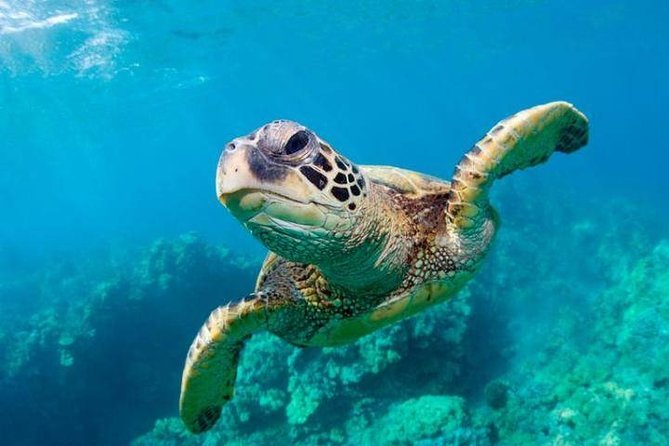
Less than you would think. Reef fish are constant, coral does not migrate, and the green turtles at Green Cay graze the same seagrass in February that they graze in August. There is no month in which the water empties out.
What shifts is water clarity and how far you can comfortably swim, both of which affect how much of it you actually see. A settled May morning with thirty metres of visibility shows you more of the same reef than a choppy January one.
Nurse sharks and southern stingrays turn up year-round and remain a matter of luck rather than season. Nobody sensible schedules a trip around them, and every listing that mentions them says so. The marine life page separates the certainties from the hopes.
Is there a turtle season?
Not for sightings. Green turtles graze the seagrass beds at Green Cay year-round and are seen in every month. Nesting season runs through the summer on Bahamian beaches, but that is a beach phenomenon rather than something a snorkeling stop shows you.
Sightings are never guaranteed in any month — the marine life page covers what is reliable and what is luck.
What does the weather actually do to a booking?
Three outcomes, in descending order of likelihood. Most often nothing happens and the boat sails. Sometimes the operator swaps the stops around to find sheltered water, which is invisible to you and is the crew doing their job. Occasionally the trip is cancelled outright and refunded.
What almost never happens is a boat sailing into conditions that spoil the day. Operators here depend on repeat cruise traffic and reviews, and a bad morning costs them more than a cancellation does.
The practical consequence is that you should book for the day you want rather than hedging towards a calmer-looking week. The refund window does the hedging for you.
Which months suit which kind of trip?
Not every departure is equally affected by the calendar. A three-hour run to sheltered water near Rose Island copes with a breezy winter morning that would make a longer crossing hard work.
The kayak morning is the most weather-sensitive of the lot, because you are paddling in open water rather than being carried through it. In December and January it rewards a spare day behind it, and the refund window makes keeping one free.
The Grand Bahama departures are the least affected by the Nassau crowd calendar, which is a separate thing from weather but shapes the same decision: in March, when Nassau is at its busiest, Freeport is not.
What about the rest of the trip — not just the boat?
The months that suit snorkeling are not identical to the months that suit a Bahamas holiday. December to March is peak season for hotels and airfares, which is exactly when the water is at its coolest and the wharf at its busiest.
May, early June and November sit in the gaps: settled water, fewer people, and rates that have come off their winter peak without entering storm season proper. That combination is why they are the value months rather than simply the quiet ones.
September is the cheapest month across the board and there is a reason for it. If you are comfortable with the risk and carry travel insurance, the water that month is the warmest and the quietest of the year.
So which month would we actually pick?
May. The water is at 26 or 27 degrees, the seas are settled, visibility is at its best, the winter crowd has gone, the storm season has barely started and the small-capacity boats still have space a few days out.
Second choice, November: the same settled water at the other end of the year, with the crowd only starting to build. Whichever month you pick, Bahamas Snorkeling Tours lists every departure that runs it.
Frequently asked questions
What is the best month to snorkel in the Bahamas?
Can you snorkel in the Bahamas in winter?
Will a hurricane ruin my trip?
Is the water ever too cold for children?
Departures that run all year
Departures that hold up across the whole calendar — two Nassau boats that run year-round and the quieter Grand Bahama alternative.