How much of a Nassau port call is actually yours?
Less than the printed hours suggest, and the gap is where plans come apart. Ships berth at Prince George Wharf in downtown Nassau, which is the good news: the wharf is in the middle of town rather than an industrial port half an hour away.
Against that, deduct thirty minutes at each end for disembarking and getting back aboard, and twenty to thirty minutes each way if your boat leaves from Paradise Island. A nine-hour call gives you roughly seven usable hours; a seven-hour call gives you about five.
| Call length | Usable hours | Trips that fit | Margin left |
|---|---|---|---|
| 6 hours | About 4 | 3-hour departures only | About 1 hour |
| 7 hours | About 5 | 3- and 4-hour departures | 1–2 hours |
| 8 hours | About 6 | Up to 4 hours comfortably | About 2 hours |
| 9 hours or more | About 7 | Everything, including the 5½-hour catamaran | 1–2 hours |
Where do the boats leave from, and how far is that?
Three clusters, and the difference between them is twenty minutes of taxi.
Downtown, beside the wharf. Señor Frog's on Woodes Rodgers Walk is a two-minute walk from where you step off the ship. For a short call this is worth more than any other feature of a trip.
Paradise Island Ferry Terminal. Across the bridge, ten to twenty minutes by taxi depending on traffic, and the departure point for several half-day boats.
East Bay Street and the marinas. Montagu Beach and the yacht havens sit east of downtown, fifteen to twenty minutes out. Quieter, and the reason the longest catamaran day starts later than it looks.
Which departures actually meet cruise passengers?
Several run drop-offs at downtown points specifically so passengers can walk back, and one boards a two-minute walk from the wharf. What almost none of them do is wait for a late ship, because the next departure is already booked.
The practical rule is to choose on departure point first and stop count second. A four-hour trip that starts beside the wharf beats a three-hour trip that starts across the bridge, once the taxis are counted.
Can a five-and-a-half-hour catamaran fit a seven-hour call?
No, and it is the most common way this goes wrong. Five and a half hours plus twenty minutes of taxi each way plus thirty minutes at each end of the ship comes to about seven hours forty. That is over before you allow for anything at all going slowly.
It fits a nine-hour call comfortably and a ten-hour call with room to spare. Below nine, take a three- or four-hour departure and enjoy the margin.
What happens if the boat runs late?
Independent operators are not held to your sailing time and cruise lines do not wait for independently booked excursions. That is the whole risk, and it is managed rather than eliminated: build in a two-hour margin, take a morning departure rather than an afternoon one, and carry the ship's all-aboard time written down.
In practice these trips run to schedule — the operators depend on repeat cruise traffic. The failures that do appear in feedback are almost always about getting to the dock, not getting back.
Should you book the ship's excursion instead?
An honest answer: the ship's version costs more and its one real advantage is that the ship waits for it. If your call is short, if you are anxious about timing, or if you are travelling with people who cannot be hurried, that guarantee is worth the premium.
If your call is eight hours or more and you can read a clock, an independent booking gets you a smaller boat and a better fare. The refund window means you can hold one now and change your mind.
A worked timeline for a seven-hour call
- 07:00 — alongside. Do not join the first queue; it clears in twenty minutes.
- 07:30 — ashore. Walk out of the terminal onto Woodes Rodgers Walk.
- 07:45 — at the dock. Downtown departures are a walk; Paradise Island is a short taxi. Agree the fare before you get in.
- 08:30 — sail. Three or four hours, two or three stops.
- 12:30 — back ashore. Two hours in hand for lunch, the straw market or a swim off the town beach.
- 13:30 — back aboard. Comfortably inside an all-aboard of 14:00.
What do you do with a bag?
Take as little as possible. There are no lockers at most departure points and few boats carry anywhere secure, so the working answer is a small dry bag with a towel, sunscreen, a card and a phone in a waterproof pouch, and everything else left in the cabin.
Two operators refuse oversized luggage and coolers outright, so bring a small bag rather than a beach day's worth of kit ashore.
How much is a taxi, and can you pay by card?
Bahamian taxis are priced by zone and quote per person on shared runs, and fares downtown to Paradise Island are small. Cash in small US notes is easiest; card acceptance is inconsistent.
Agree the fare before you get in. It is the single most common complaint in the feedback on these trips and it is entirely avoidable.
What if the weather turns on your call day?
Operators cancel and refund rather than sail into bad weather, and several refund in full when they postpone. Because you are on a ship you cannot rebook for tomorrow, so the fallback matters: the town beach, the straw market and Fort Charlotte are all within reach on foot or a short taxi.
Winter cold fronts cause more cancellations than storms do. If you are calling between December and March, an early booking with a refund attached is exactly the right risk to take.
Is there a beach option if time is tight?
Yes, and it is a perfectly good afternoon. Junkanoo Beach is a walk from the wharf, and Cable Beach is a short taxi with patch reef at its western end. Bring or hire a mask and you have shore snorkeling with no schedule attached.
The going-without-a-tour guide covers each shore option properly, including where the reef actually starts.
Is it worth crossing to Paradise Island?
Usually yes, and the reason is not the boat — it is the water. The departures from the Paradise Island Ferry Terminal reach the eastern cays quickly, which is where the reef, the turtle grounds and the beach clubs are. Boarding downtown saves twenty minutes of taxi and spends some of it on the run out.
The exception is a genuinely short call. Under seven hours, a departure you can walk to is worth more than any improvement in the itinerary, because the variable you cannot control is traffic on the bridge.
Traffic is worst mid-morning and again in the late afternoon, which is precisely when a cruise passenger is travelling in each direction. Allow twenty minutes each way and treat anything faster as a bonus.
What if two ships are in on the same day?
Then the reef stops are busy and the taxi queue is longer, and both are worth planning around rather than worrying about. Nassau regularly handles several ships at once, and the day-trip fleet runs on the same schedule as the calls.
Two responses work. Take the earliest departure of the day, which leaves before the bulk of passengers are ashore. Or take a boat with a cap of ten or fewer, which will anchor away from the crowd because it can.
The one thing not to do is book the most popular departure at the most popular time and expect a quiet reef. That is a solvable problem and the solution costs nothing.
Can you do this from Freeport instead?
Grand Bahama takes cruise calls too, and the arithmetic is different. Port Lucaya is the only real hub, the island is spread out, and the trips that leave from there are longer — a six-hour day rather than a three-hour one.
On a Freeport call, the six-hour sea-scooter day fits an eight-hour stop and very little else does comfortably. The private half-day with hotel pick-up is the alternative if the call is shorter. The Grand Bahama page covers both.
What does not work is treating the two islands as one destination. A Nassau call cannot reach a Freeport boat and the reverse is equally true.
What can you do with the hours either side?
More than most passengers realise, because the wharf is in the middle of town rather than an industrial port. Within a fifteen-minute walk there is the straw market, the colonial core around Parliament Square, the Queen's Staircase and Junkanoo Beach.
That matters for planning: a four-hour boat that gets you back by half past one does not end your day, it ends the water part of it. Passengers who book a five-and-a-half-hour trip on an eight-hour call are effectively choosing the boat instead of Nassau, which is a fine choice made deliberately and a disappointing one made by accident.
Eat ashore rather than aboard if you have the time. Conch salad at the fish fry east of the bridge is the local answer, and it is a short taxi from the terminal.
The short version
Choose on departure point, then on length, then on stops. Take the morning slot. Leave two hours of margin. Agree the taxi fare first, carry small notes, and write the all-aboard time on your hand.
Every departure on Bahamas Snorkeling Tours lists its dock and its duration, which are the two numbers a cruise day turns on.
Frequently asked questions
Will the ship wait for an independent tour?
Which trips leave closest to the cruise wharf?
Can I snorkel and still see Nassau?
Do I need cash ashore?
Trips that fit a port call
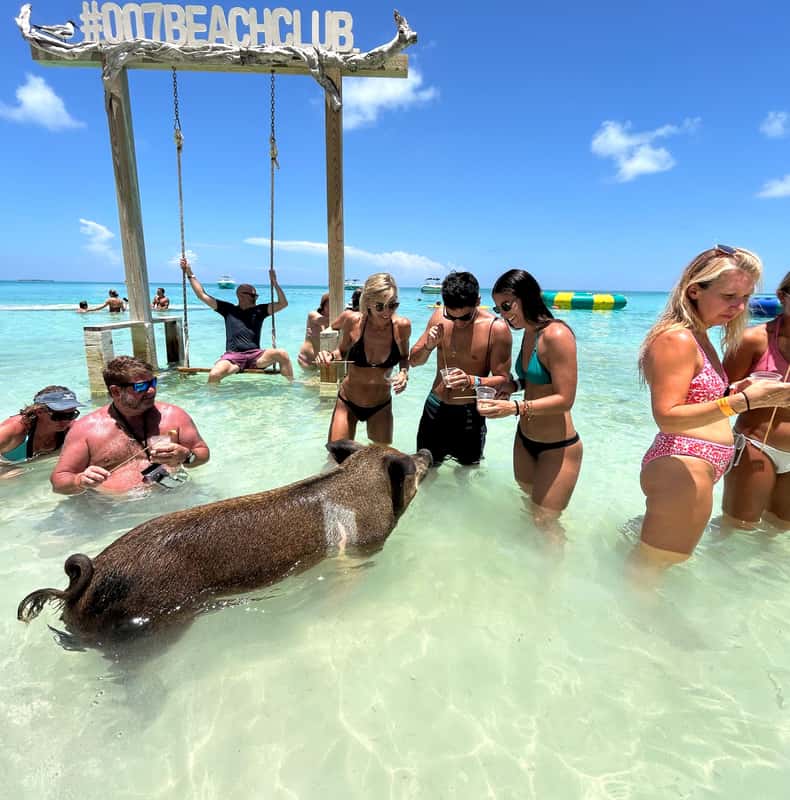
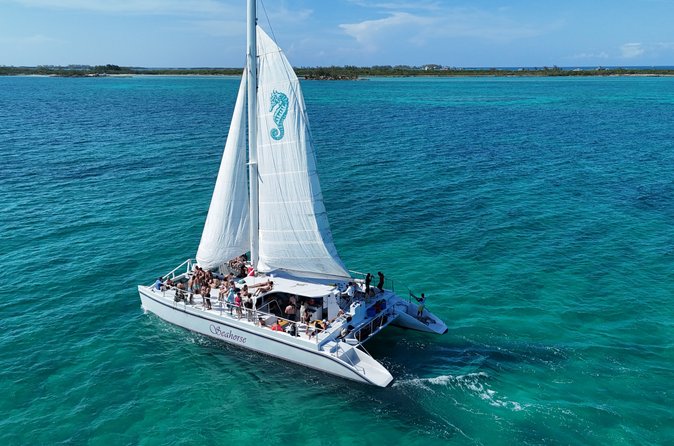
Three departures that fit inside a standard Nassau call, from the shortest run available to a four-hour day that ends at a beach club.