Best Bahamas Snorkeling Spots, Reef by Reef
Every named reef, cay and sea cave these boats visit — what is actually there, how long you get, and which departure takes you.
OrientationThe reefs these boats actually work
The water around New Providence is shallow, warm and unusually forgiving. Reef sits in two to eight metres for most of the stops these trips make, which means you float on the surface and look down rather than diving for anything. Half an hour east of Nassau a chain of small cays — Athol, Rose, Green Cay, Pearl Island — shelters that water from the open Atlantic, and almost every departure works some combination of them.
What follows is each named stop, what is actually there, and which kind of trip reaches it. The spots differ more than the boats do, and knowing which one a departure visits tells you more about your day than its title does.
Rose Island
A thin ridge of sand and scrub about eight kilometres long, running east from Paradise Island, with reef on the northern side and sheltered beach on the southern. It is the single most-visited stop in Bahamian snorkeling, and the reason is geography: it is close enough for a three-hour trip and big enough to hold several beach clubs without any of them feeling crowded.
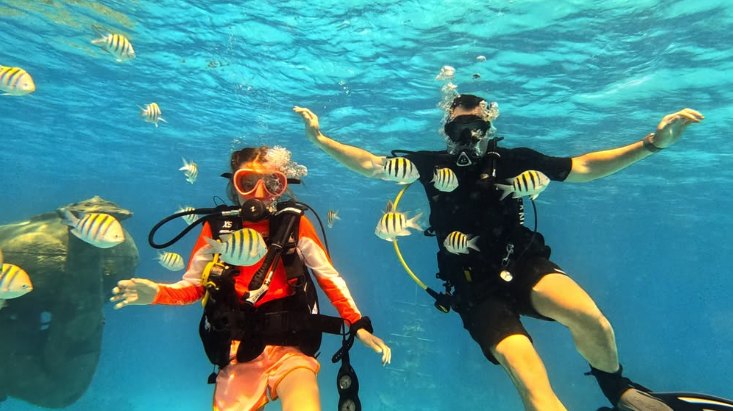
The snorkeling here is easy — waist-to-chest depth over patch reef, sergeant majors and yellowtail snapper in numbers, and the occasional turtle passing through. The beach clubs bring hammocks, kayaks, water trampolines and lunch, which is what turns a reef stop into a day. On the busiest shared departures the nearest coral heads have been worn smooth by traffic, and travellers say so; the smaller boats anchor further along the reef.
Reached by: most Nassau half-day departures, including every three-stop island run and the shorter turtle trips.
Athol Island and the shallows
Athol lies immediately east of Paradise Island, close enough that boats reach it in ten minutes. The seabed between Athol and the shore is littered with wrecks and concrete film props, some sunk deliberately, and the shallows over them have grown into artificial reef.
This is usually the first stop of a morning and the gentlest one: flat water, a sandy bottom you can stand on in places, and structure close enough to the surface that a nervous swimmer sees everything without going deep. If someone in your party is getting in the water for the first time, this is where it will happen.
Reached by: the three-stop island runs and the sail-and-snorkel departures from the Paradise Island Ferry Terminal.
Green Cay and the turtle grounds
A small uninhabited cay with a seagrass bed in its lee, which is the whole point: green turtles graze seagrass, and they come to this one in numbers. Boats anchor off and you slip in over water shallow enough to see the bottom the whole time.
Sightings are common and most mornings deliver, but they are wild animals and no honest operator promises them — one listing says exactly that in writing. Twenty minutes is the standard stop, which is long enough if the turtles are there and short if they are not. Do not chase, do not touch, and do not feed them: a turtle that associates boats with food stops feeding on seagrass.
Reached by: the three-stop island runs, the Rose Island turtle trips and the catamaran departures.
Pearl Island reef
Pearl Island sits north-east of Athol and carries the most photographed coral on the New Providence side. The reef here is denser than at Rose Island and the fish are used to swimmers, which means parrotfish, sergeant majors, blue tang and the occasional trumpetfish come within arm's reach without being fed.
An hour is the usual allocation and it is the longest single in-water stop any of these departures makes. The island itself has a lighthouse, a bar and a small beach, so non-swimmers are not stranded on the boat.
Reached by: the four-hour speedboat island run out of Nassau.
The thing everyone gets wrongPig Beach — which one you are being sold
This is the single most confused thing about booking a Bahamian boat trip, and it is worth being blunt about. There are two places sold as Pig Beach and they are about eighty miles apart.
The famous one is Big Major Cay, in the Exuma Cays, where a population of feral pigs swims out to meet boats. It is the beach in every photograph, and from Nassau it is reachable in a day only by air — roughly thirty minutes to Staniel Cay and a boat from there.
The Nassau pigs are a different, closer thing. Several operators keep pigs at beach clubs on and around Rose Island, Athol Island and Pearl Island, twenty to thirty minutes from the wharf. You will wade with pigs, feed them and photograph them, and most people leave delighted. It is simply not the island from the photograph, and a trip that implies otherwise is worth reading twice.
Know which stop you want?
Every departure below lists the cays it visits and how long it stays at each, with a full refund up to 24 hours ahead.
Thunderball Grotto and Compass Cay
Both sit in the Exumas and both are reached only on the fly-in day. Thunderball Grotto is a hollow limestone cay off Staniel Cay, open to the sea at water level and pierced through the roof, so shafts of light drop into the chamber and the fish inside sit in the beam. It takes its name from the Bond film shot there in 1965. Enter at slack water; the current runs through the openings on a moving tide.
Compass Cay, a short run north, is where nurse sharks gather at a marina dock. They are bottom-feeding, slow and entirely uninterested in swimmers, and people wade among them daily. Neither of these is a Nassau day trip, and no boat from New Providence reaches them and returns.
Spots you can reach from the beach
Not everything needs a boat, and it is worth saying so before you spend anything. Love Beach on the north-west shore of New Providence sits opposite a shallow reef within swimming distance of the sand. Cable Beach has patch reef and fish at its western end. On Grand Bahama, the shore off Taino Beach and Fortune Beach holds the same.
What the beach cannot give you is the living outer reef, the turtle grounds, the sandbars or any pig beach — those are boat-only, without exception. Hire a mask, never swim alone, stay inside marked areas and keep clear of boat channels. The going-without-a-tour guide works through each shore option properly.
At a glanceWhich trip reaches which stop
| Spot | Island group | How you get there | What you see | Typical stop |
|---|---|---|---|---|
| Athol Island | New Providence | Boat, 10 minutes from Paradise Island | Wrecks, artificial reef, easy shallows | 10–30 minutes |
| Rose Island | New Providence | Boat, 25–35 minutes | Patch reef, beach clubs, Nassau pigs | 45 minutes to 2 hours |
| Green Cay | New Providence | Boat, 30–40 minutes | Seagrass beds and green turtles | About 20 minutes |
| Pearl Island reef | New Providence | Boat, 30 minutes | The densest coral near Nassau | About 1 hour |
| Sun Cay | New Providence | Boat, 30 minutes | Lighthouse and a sand beach | Beach stop |
| Big Major Cay | Exumas | Flight to Staniel Cay, then boat | The famous swimming pigs | Part of a full day |
| Thunderball Grotto | Exumas | Flight, then boat | A lit sea cave full of fish | Part of a full day |
| Love Beach / Cable Beach | New Providence | Taxi, then swim out | Patch reef and reef fish | As long as you like |
Every departure on Bahamas Snorkeling Tours names the cays it visits. For what is swimming over them, see marine life; for the Grand Bahama reefs, which are a separate system entirely, see Freeport and Grand Bahama.