Bahamas Snorkeling Marine Life: What You'll See
The certainties, the likelihoods and the things nobody can promise — plus the short list of what never to touch.
The certaintiesWhat you will almost certainly see
Bahamian patch reef is busy, and the fish are habituated to swimmers. Within a minute of getting in on any of these stops you will be surrounded by sergeant majors — small, striped, insistent — and yellowtail snapper hanging in the current. Blue tang move through in loose shoals, parrotfish crunch audibly at the coral, and trumpetfish hang vertically pretending to be sea rods.
None of that requires luck. It is what the reef holds on an ordinary morning, and it is the reason a stop with no turtle in it is still worth making.
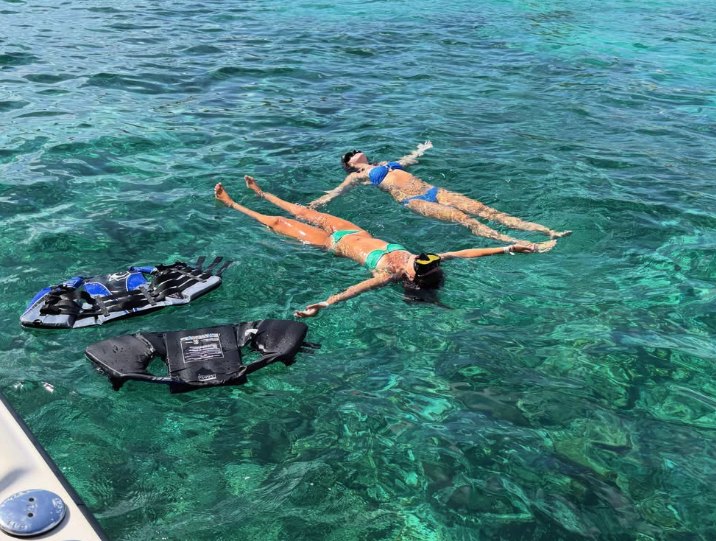
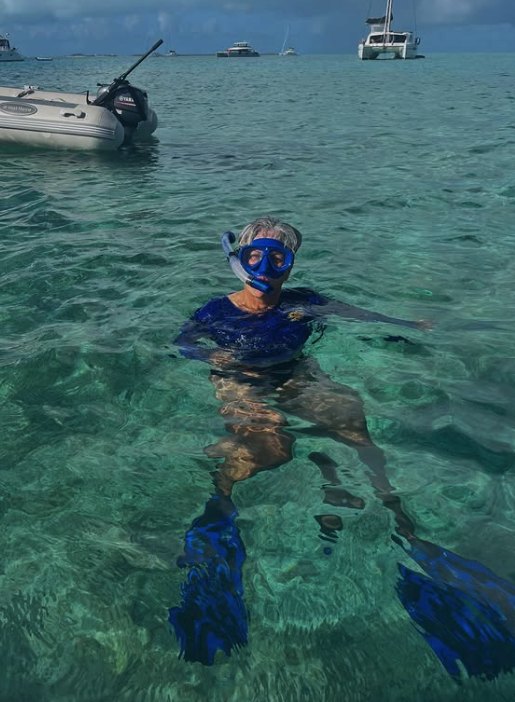
Green turtles and hawksbills
Two species turn up on these trips and they behave differently. Green turtles are the ones at Green Cay: adults graze seagrass in shallow water, which is why they are reliably in one place and why the boats go there. Hawksbills are smaller, sharper-beaked, and feed on sponges out on the reef, so they are seen in passing rather than waited for.
Sightings are common but they are not promised, and one operator states in writing that turtles are wild and cannot be guaranteed. Both species are protected in Bahamian waters. Keep a couple of metres back, never chase one to the surface for a photograph, and never feed them — a fed turtle stops grazing, and grazing is what keeps the seagrass beds alive.
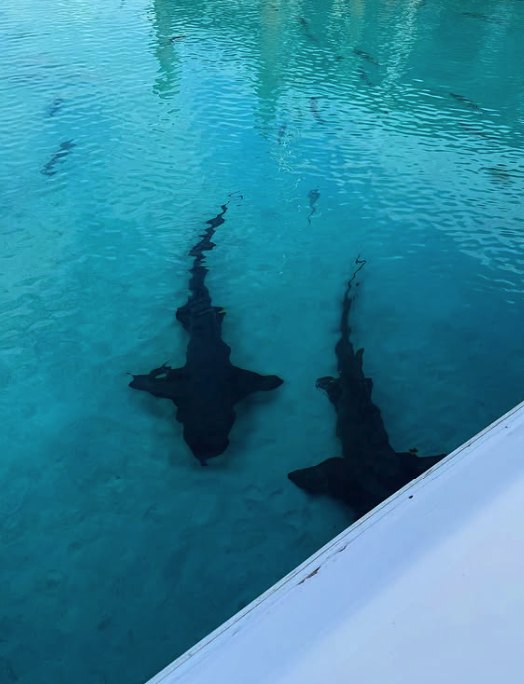
Nurse sharks, and why nobody on the boat is worried
The word shark does a lot of damage to a family booking, so here is what is actually true. Nurse sharks are bottom-dwellers with small mouths built for sucking crustaceans out of sand. They spend most of the day lying motionless under ledges, they are not fast, and they have no interest in a swimmer.
At Compass Cay in the Exumas people wade among them daily. Around Nassau you may see one resting and you may see none. The rule is the same either way: look, do not touch, and do not corner one against a ledge. Bull and reef sharks do live in Bahamian water, in deeper channels well away from these shallow stops.
Southern stingrays
Southern stingrays cruise the sandy patches between coral heads, and on a calm morning you will see the sand puff where one has just buried itself. They are broad, grey and unhurried, and they move off long before you reach them.
They sting defensively, only when stepped on. Where you have to walk on sand, do the shuffle every Bahamian boat crew will show you: slide your feet rather than lifting them, and a ray feels you coming and leaves.
The coral itself, and what has happened to it
The reefs here are dominated by elkhorn and staghorn coral in the shallows, brain coral in rounded heads, and sea fans and sea rods waving in the surge. On the better stops there is real structure; on the worn ones there is rubble and algae, and it is visible immediately.
Caribbean coral has had a hard four decades. Bleaching events, disease and storm damage have thinned elkhorn in particular across the region, and the shallow, heavily-visited patches near a busy anchorage show it worst. Nothing you can do about it in a morning — except the two things that matter: do not stand on it, and use a mineral sunscreen.
Want the best chance of turtles?
The trips that stop at Green Cay put you over the seagrass beds where the green turtles feed, with gear and guidance included.
What not to touch, and what not to feed
- Do not stand on coral. A single footprint kills decades of growth, and it cuts you badly. Float; that is what the vest is for.
- Do not touch turtles or rays. It is illegal for protected species in Bahamian waters and it strips the mucus layer that protects them from infection.
- Do not feed the fish. Bread wrecks their gut and it teaches a reef to mob swimmers. If a crew feeds fish, that is their call, not yours.
- Do not take anything. Live conch, shells with an occupant and coral fragments all stay. Queen conch is regulated and taking it is an offence.
- Use mineral sunscreen. Zinc oxide or titanium dioxide, applied at the hotel rather than on the boat. The tips page covers what to buy and when.
Species you may meet, at a glance
| Species | How common | Where on these trips | Size | Touch? |
|---|---|---|---|---|
| Sergeant major | Every stop | Anywhere with structure | To 15 cm | No need — they come to you |
| Yellowtail snapper | Every stop | Mid-water over reef | To 40 cm | No |
| Blue tang | Very common | Grazing algae in loose shoals | To 25 cm | No — spine at the tail base |
| Parrotfish | Very common | Audibly biting coral | To 60 cm | No |
| Green turtle | Likely at Green Cay | Seagrass beds | To 1.2 m | Never — protected |
| Hawksbill turtle | Occasional | Out on the reef | To 90 cm | Never — protected |
| Southern stingray | Occasional | Sand between coral heads | To 1.5 m across | Never; shuffle your feet on sand |
| Nurse shark | Occasional; reliable at Compass Cay | Under ledges, on sand | To 3 m | Never |
For which stop puts you over which habitat, see the snorkeling spots. The Bahamas Snorkeling Tours comparison table shows how long each departure spends in the water, which is the number that decides how much of this you actually see, and Bahamas snorkeling tickets all carry a guide who will point out what you would otherwise swim past.