The short answer
Two different islands are sold as Pig Beach. The reef you snorkel sits beside a trench more than a mile deep. The water is that colour because of what is under it, not in it. And the sharks everyone worries about are asleep on the sand.
1. There are two Pig Beaches, eighty miles apart
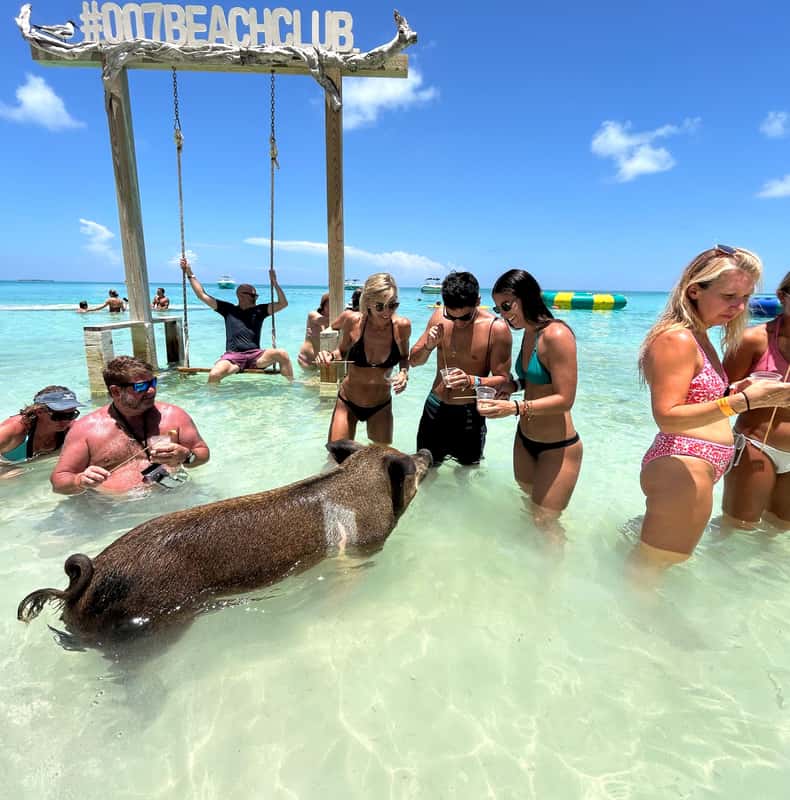
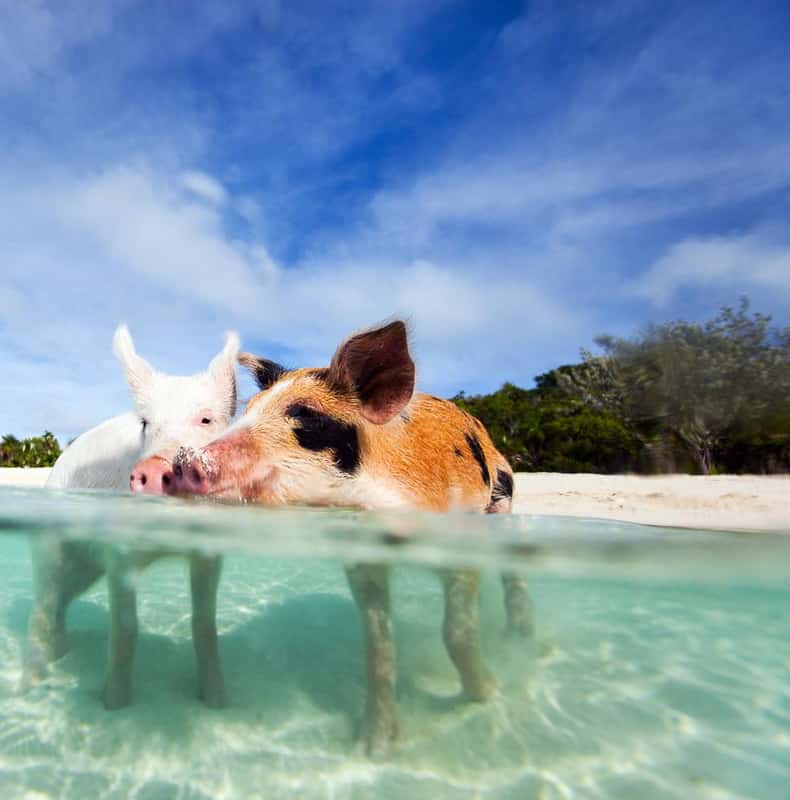
The famous swimming pigs live at Big Major Cay in the Exumas. The pigs most Nassau day trips visit live at beach clubs on the Rose Island chain, twenty-five minutes from the wharf. Both are real, both are fun, and only one of them is the island from the photograph. Which is which is the single most useful thing to know before booking.
2. Nobody knows for certain how the pigs got there
The stories range from shipwrecked livestock to sailors leaving a food supply to a 1990s tourism idea. No contemporary record settles it. What is documented is that the colony has been a fixture since at least the 1990s and is now managed, because feeding pigs bread and beer turned out to be as bad for them as it sounds.
3. The reef sits beside water more than a mile deep
The Tongue of the Ocean is a trench that cuts into the Bahama Banks between Andros and New Providence, and it drops well past 1,500 metres. You can be floating in three metres of water over a coral head with that on the horizon. The contrast is why the shallows look the colour they do.
4. The colour comes from the bottom, not the water
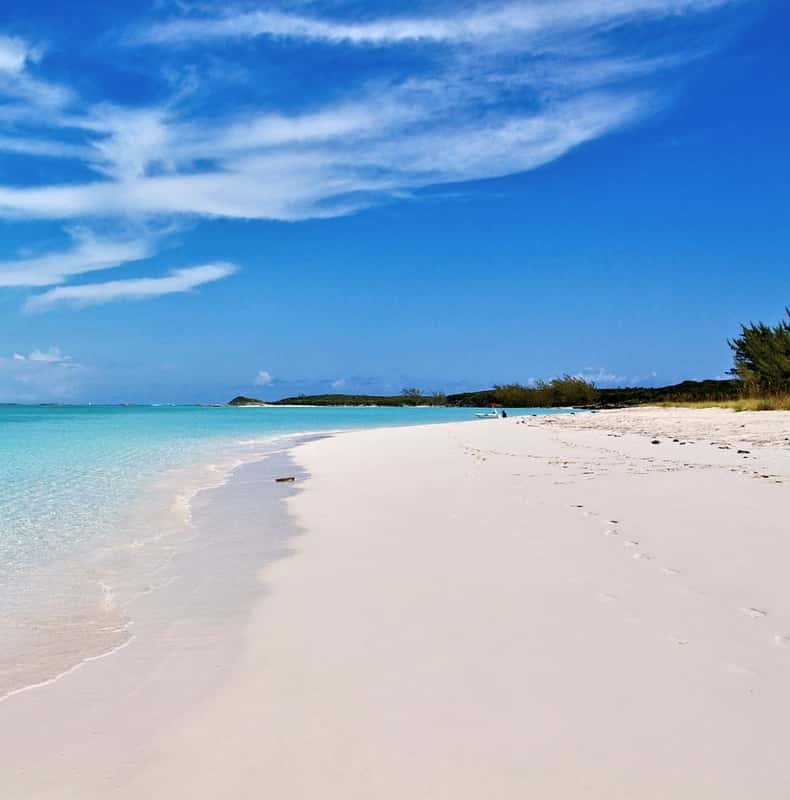
Bahamian water is not dyed turquoise. It is exceptionally clear water over pale carbonate sand, which reflects light back up through it. Deep water absorbs the red end of the spectrum and looks blue-black; shallow water over white sand throws light back and reads as turquoise. The banding you see from a plane is a depth map.
5. The sand is mostly the skeletons of algae
Caribbean white sand is not ground-up rock. Much of it is calcium carbonate precipitated by marine organisms — particularly Halimeda, a green alga that builds calcified plates and sheds them when it dies. Parrotfish contribute the rest by biting coral, digesting the algae and passing the limestone.
| What people assume | What is actually true |
|---|---|
| The water is dyed or filtered somehow | Clear water over pale carbonate sand, reflecting light back up |
| The sand is ground-up rock | Mostly calcium carbonate from algae and parrotfish |
| Pig Beach is one place | Two, eighty miles apart, sold under one name |
| Sharks are the risk | Sunburn and standing on coral are |
| Hurricanes cancel most trips | Winter cold fronts cancel far more |
| Coral has always looked like this | Elkhorn was dominant within living memory and is now critically endangered |
6. Nurse sharks are asleep
The sharks people wade among at Compass Cay are nurse sharks: bottom-dwellers with small mouths built for sucking crustaceans out of sand. They are nocturnal, so by day they lie motionless under ledges and on sand. They are not tame and they are not dangerous; they are simply not interested.
7. Thunderball Grotto is named after a Bond film
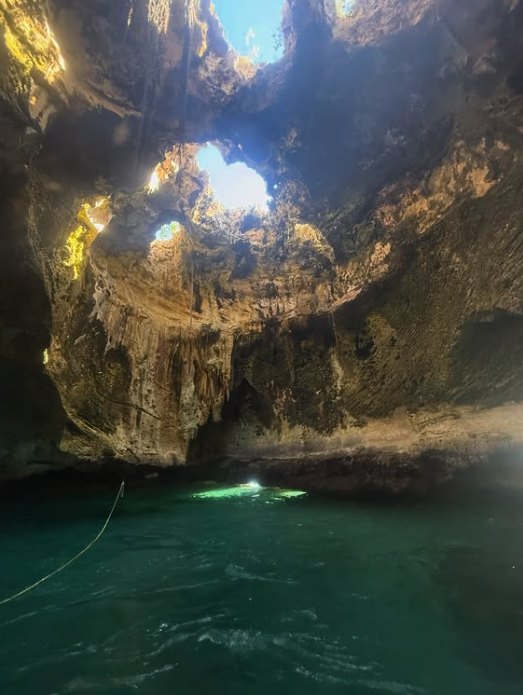
The sea cave off Staniel Cay appeared in Thunderball in 1965 and again in Never Say Never Again in 1983. The name stuck. Light falls through holes in the roof into a chamber you can swim across, and the fish gather in the beams.
8. Green turtles are vegetarians, and that is why you find them
Adult green turtles graze seagrass, which grows in predictable, shallow, sheltered beds. That is the entire reason Green Cay is a reliable turtle stop while the open reef is not. Hawksbills, by contrast, eat sponges out on the reef and turn up wherever the sponges are.
9. Queen conch is protected, and the shell is not a souvenir
Queen conch is regulated in Bahamian waters, with closed seasons and size limits, and taking a live one is an offence. An empty shell may look like a free souvenir; many countries will confiscate it at the border under wildlife trade rules. Leave it.
10. The archipelago has around 700 islands and only about 30 are inhabited
The Bahamas stretches roughly 800 kilometres from north-west to south-east and counts around 700 islands and cays plus thousands of rocks. Fewer than thirty carry any permanent population. That is why an uninhabited cay with a beach to yourself is an ordinary Tuesday here rather than a luxury.
11. Winter cold fronts, not hurricanes, wreck most trips
Hurricane season runs from 1 June to 30 November and gets the attention, but the weather that actually cancels a January morning is a cold front pushing down from Florida. It drops the air temperature a few degrees and turns the sea lumpy for a day or two. The seasonal guide works through the whole year.
12. Protected reefs look different from the surface
The Bahamas National Trust manages a network of protected areas across the archipelago, and the difference between a managed reef and an unmanaged one is visible within about thirty seconds of putting your face in the water. Fish are bigger, coral cover is higher, and the whole system looks busier.
It is the strongest practical argument for choosing a departure that works quieter water over one that anchors where forty other boats have already been that week.
13. Conch shells sing, and the fishery is regulated for it
The conch horn is a Bahamian instrument, sounded at Junkanoo and at the fish market, and conch salad is the national dish. That popularity is exactly why the fishery carries closed seasons, size limits and export controls, and why an attractive empty shell on a beach is a legal question rather than a souvenir.
Live queen conch sit on the seagrass flats you snorkel over. If you find one, look at it and put it back exactly where it was, lip down.
14. Elkhorn coral used to be everywhere
Elkhorn was the dominant shallow-reef builder across the Caribbean within living memory. Disease, bleaching and storm damage have thinned it dramatically since the 1980s, and it is now listed as critically endangered. Where you see healthy elkhorn on a Bahamian stop, you are looking at something that has become rare.
Two things a visitor can do about it, and they are both free: do not stand on coral, and use a mineral sunscreen. The tips page covers which to buy.
See it rather than read about it
Reef trips run daily from Nassau and Freeport with gear included and free cancellation up to 24 hours ahead.
Trips that reach the places in this post
The fly-in day to Big Major Cay and Thunderball Grotto, and two Nassau runs that cover the closer pigs and the turtle grounds.