The short answer
A Nassau morning works a chain of cays east of Paradise Island: Athol for the wrecks and the easy shallows, Pearl Island for the densest coral, Green Cay for turtles and Rose Island for the beach and the pigs. Grand Bahama works a separate reef line off Port Lucaya, and the Exumas are a flight away.
Why the stop matters more than the boat
Two departures at the same price can give completely different days, and the variable is almost never the vessel. It is which cays the boat stops at and how long it stays. A four-hour trip with three stops covers more reef than a six-hour trip with one.
What follows is the order a Nassau morning usually visits them in, though wind decides the sequence on the day.
Athol Island: ten minutes out, and the gentlest water there is
Athol sits immediately east of Paradise Island, close enough that boats reach it before anyone has finished putting fins on. The seabed between Athol and the shore carries wrecks and concrete film props, some sunk deliberately, and the shallows over them have grown into artificial reef.
Flat water, a sandy bottom you can stand on in places, structure close enough to the surface to see everything without going deep. If someone in your party is getting in the sea for the first time, this is where it should happen.
Pearl Island: the densest coral near Nassau
North-east of Athol, and the stop that justifies the whole morning. The coral here is denser than anywhere else within reach of a half-day boat, and the fish are entirely habituated: parrotfish crunching audibly, blue tang moving through in loose shoals, trumpetfish hanging vertically among the sea rods.
An hour is the standard allocation and it is the longest single in-water stop any Nassau departure makes. The island has a lighthouse, a bar and a small beach, so nobody is stuck on the boat.
Green Cay: the turtle grounds
A small uninhabited cay with a seagrass bed in its lee. Green turtles graze seagrass, which is why they are reliably here and why almost every boat calls in. You slip in over water shallow enough to see the bottom the whole time.
Rose Island: the long stop
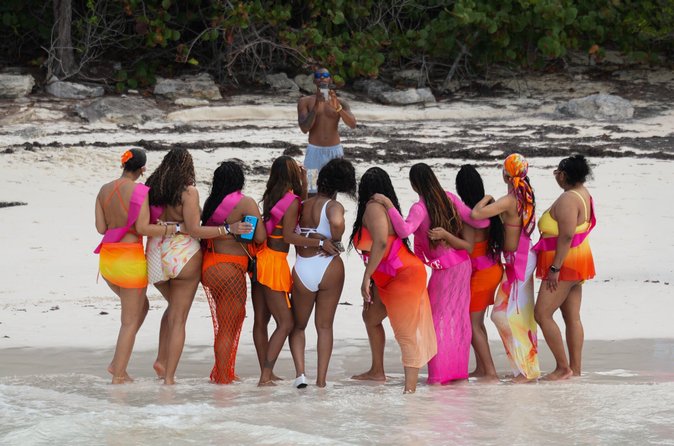
Eight kilometres of sand and scrub running east from Paradise Island, with reef on the northern side and beach clubs on the southern. It is the most-visited stop in Bahamian snorkeling, because it is close enough for a three-hour trip and big enough that several operators can use it without crowding each other.
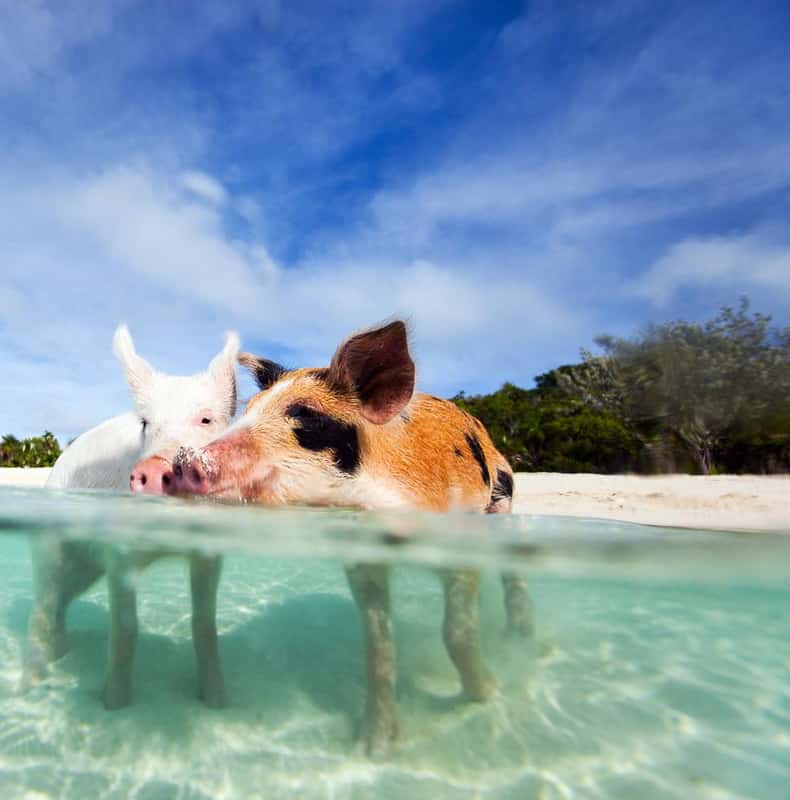
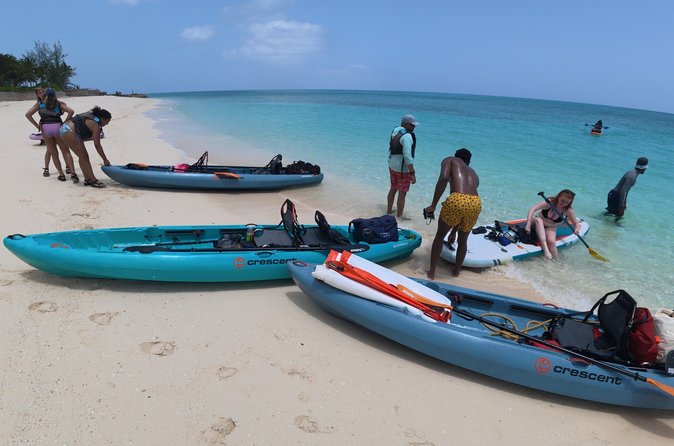
This is where the pigs are, where lunch is served and where the kayaks and hammocks live. It is also where the honest caveat belongs: on the busiest shared departures the nearest coral heads have been worn smooth by traffic, and travellers say so. The smaller boats anchor further along the reef.
The Grand Bahama reefs
A separate island and a separate reef system. Grand Bahama's south shore drops onto a reef line that runs for kilometres, and the shallow sections are what the Port Lucaya boats work. Rainbow Reef is the best-known: a shallow coral garden a short run offshore, dense with sergeant majors and parrotfish.
Visibility here is often better than off Nassau for the simple reason that far fewer hulls stir it up. The Grand Bahama page covers the departures and how the island compares.
Thunderball Grotto and the Exumas
Thunderball Grotto is a hollow limestone cay off Staniel Cay, open to the sea at water level and pierced through the roof, so shafts of light drop into the chamber and the fish sit in the beam. It took its name from the Bond film shot there in 1965.
Enter at slack water — the current runs hard through the openings on a moving tide. Compass Cay, a short run north, is where nurse sharks gather at a marina dock. Neither is a Nassau day trip: the only way to reach them and return is by air.
How deep is it, really?
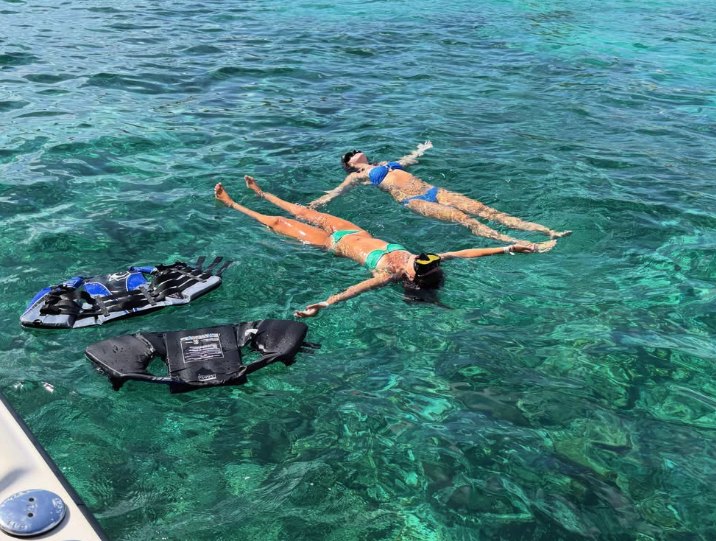
Shallower than almost anyone expects. Most of these stops sit in two to eight metres of water, which means you float on the surface and look down rather than diving for anything. At Athol and along parts of Rose Island you can stand on sand between the coral heads.
That is why Bahamian snorkeling suits beginners so well. There is no skill involved beyond breathing through a tube, the vest holds you up whether you want it to or not, and everything worth seeing sits within a few metres of the surface. The deep water is out past the reef line, and no snorkeling stop goes there.
What decides visibility on the day
- Wind. The single biggest factor. A breeze builds chop, chop stirs sand, and stirred sand is what you end up looking through. This is why boats leave in the morning.
- Traffic. The more hulls that have anchored at a stop before you, the more disturbed the bottom. An early departure sees clearer water at the same reef.
- Recent weather. Two days after a front, visibility is still recovering. Two days into settled weather, it is exceptional.
- Tide. Water moving over the banks carries fine sediment, so slack water is clearest — which matters most at Thunderball Grotto.
None of that is worth planning a trip around, because you cannot know it a week out. It is worth knowing when you choose between a morning and an afternoon slot on the same boat.
Which stop for which kind of day
| If you want | Go to | Why |
|---|---|---|
| Your first time in the water | Athol Island | Flat, shallow, sheltered, ten minutes out |
| The best coral near Nassau | Pearl Island | Densest reef, an hour in the water |
| Turtles | Green Cay | Seagrass beds they graze daily |
| A beach day with reef attached | Rose Island | Beach clubs, pigs, kayaks, lunch |
| Quiet water and better coral | Rainbow Reef, Grand Bahama | A fraction of the boat traffic |
| The famous pigs and a sea cave | Big Major Cay and Thunderball Grotto | Exumas — the fly-in day only |
Every spot above is described properly on the snorkeling spots page, and Plan Your Trip covers which dock each departure leaves from.
Pick a trip by its stops, not its title
Every departure lists the cays it visits and how long it stays, with free cancellation up to 24 hours ahead.
Trips that cover the most reef
Three departures that stop at more than one cay, from a four-hour island run to a kayak paddle out to a reef platform.