The short answer
Most Bahamian boats take children from four or five upwards, and the ones that work best have shade, a washroom and a beach stop rather than the deepest reef. Life vests are standard, several trips carry a floating platform for non-swimmers, and the small-group departures give a nervous child far more attention.
What actually decides whether it works
Not the reef. Children are impressed by fish at almost any stop. What decides the day is whether there is somewhere to be when they have had enough of the water — shade, a toilet, a beach, a kayak — and whether an adult can stay with them without missing the whole trip.
Which is why the best family departures are rarely the ones with the most snorkeling. They are the ones with a long beach stop attached.
Age minimums, trip by trip
These vary more than anything else in the listings, and they are stated per departure rather than by any general rule.
| Kind of trip | Typical minimum | Infants? | What makes it work |
|---|---|---|---|
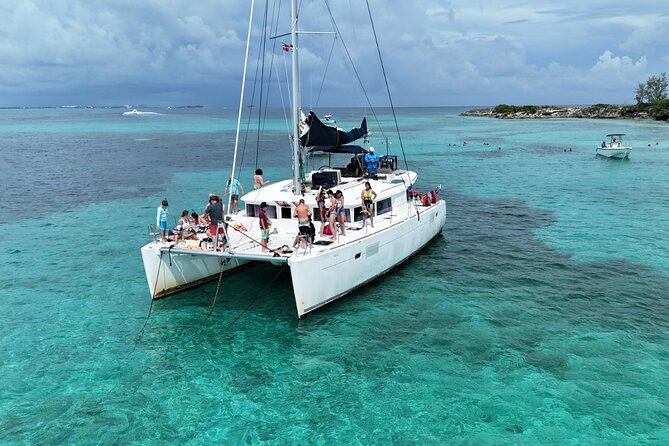
| Catamaran island run | Around 2–5 | Some take infants on laps | Shade, a washroom, room to move |
| Speedboat island run | Around 4–6 | Rarely | Short hops, long beach stop |
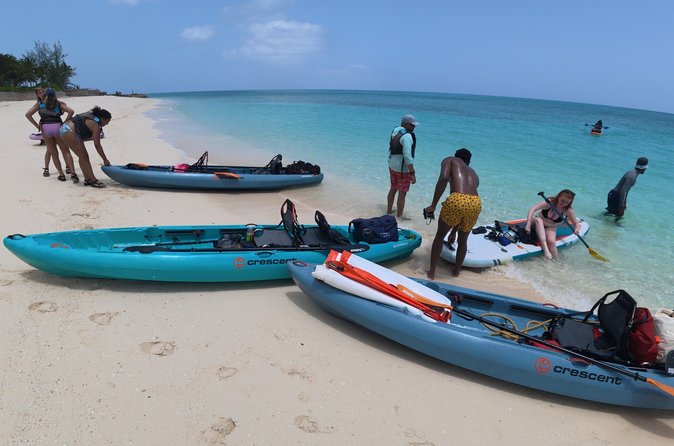
| Small-group kayak | Around 10 | No | Six travellers, a floating platform to hang off |
| Private charter | Operator's discretion | Usually yes | Your own boat, your own pace |
| Private vehicle tour | Any | Infant seats stated | Door to door, no shared schedule |
The three features worth paying for
- A covered deck. Four hours of Bahamian sun on a child is the thing that ends a good day early. A catamaran with shade is worth more than an extra reef stop.
- A washroom aboard. Obvious, frequently absent, and non-negotiable with anyone under about eight.
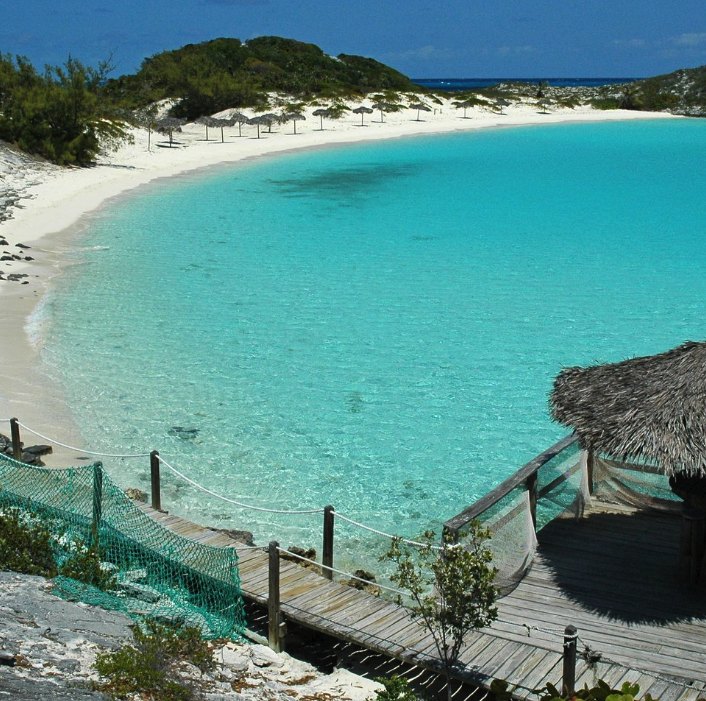
- A beach stop. Somewhere to stand up, dig, eat and be bored safely. The trips with two hours on Rose Island are family trips whether they say so or not.
Children who do not want to snorkel
Plenty do not, and it is not a problem on the right boat. Several departures carry a floating platform moored at the reef, so a child can lie on it with a mask in the water and see everything without ever letting go. Kayaks, water trampolines and a beach do the rest.
The trips to avoid for a reluctant swimmer are the ones with a single deep reef stop and no beach — a good morning for an adult and a long one for a child.
The talk to have before you board
Two minutes on the dock saves an hour of negotiation in the water. Tell a child what the mask will feel like, that water in the tube is normal and easily blown out, and that they can come back to the boat whenever they want to. The last part is the one that matters: a child who knows the exit is open rarely uses it.
Practise in a hotel pool the day before if you can. Ten minutes with a mask in chest-deep water removes almost all of the novelty, and the novelty is what causes the panic.
Safety, plainly
- Life vests are provided on every trip listed and children wear them as a matter of course. Ask for one that fits before you leave the dock.
- One adult per child in the water, however good the crew are. The crew are watching the group.
- Sun does more damage than the sea. A rash guard beats reapplying sunscreen to a wet, wriggling child every hour.
- Seasickness hits children harder. Eat before boarding, stay on deck, and pick a catamaran over a powerboat if anyone is prone to it.
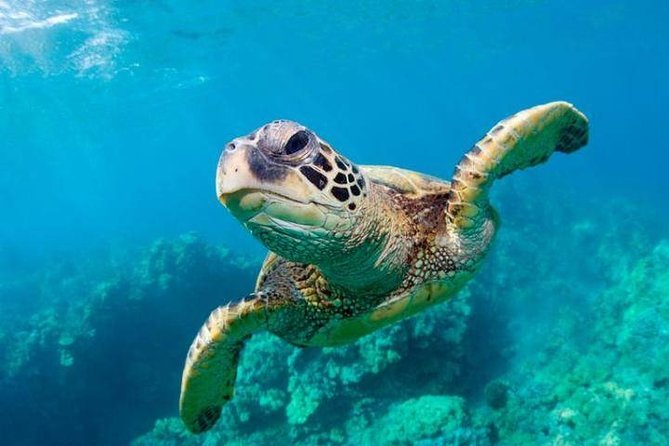
- Nurse sharks and rays are not the risk. Standing on coral and sunburn are. What is actually down there is worth showing them before you go.
What to pack for a child that you would not pack for yourself
A rash guard, a spare dry T-shirt, something to eat that they will definitely eat, and a cheap pair of water shoes for the beach stop. One traveller's note about a lunch their child would not touch is the most quietly useful piece of feedback on any of these trips. The rest of the kit list is on the tips page.
Timing the day around a child
Morning departures are better for children for the same reasons they are better for everyone: the sea is calmer and the sun is lower. They are also better because a child who has been in salt water for four hours is finished by early afternoon, and a trip that ends at two leaves the rest of the day intact.
Length matters more here than it does for adults. Three or four hours is usually the right call; five and a half is a long time for anyone under about eight, however good the boat. If the choice is between more stops and getting back before everyone has had enough, take fewer stops.
Feeding them
The trips that include lunch are worth the premium with children, because the alternative is a beach bar with a short menu and a queue. That said, one traveller's note about a lunch their son would not eat is the most quietly useful piece of feedback anywhere in these listings: Bahamian boat lunches lean towards chicken and rice, and a fussy eater will not be catered for.
Bring something you know they will eat, and bring more water than you think you need. Several boats carry bottled water and a fruit punch alongside the alcohol, but the supply is calibrated for adults.
What to do while a child is in the water
Get in with them. It sounds obvious and it is the part people skip, usually because they want to swim further out and see more. On a reef stop the interesting part is right under the boat, so there is very little to give up.
If two adults are travelling, take turns rather than both going. One in the water beside the child and one on deck with the bag, the towels and the sunscreen makes for a far calmer stop than two adults fifty metres away and a crew member counting heads.
Which departures suit a family best
Broadly: a catamaran if you want shade and a washroom, the small-group kayak morning if your children are ten or over and you want attention rather than scale, and a private vehicle tour from Freeport if you need infant seats and step-free access. Plan Your Trip covers which dock each one leaves from, and how long the taxi takes.
Find a trip that suits your family
Group caps, shade, washrooms and beach stops are listed per departure, with free cancellation up to 24 hours ahead.
Trips that work with children
A covered deck and a washroom, a six-traveller cap with a floating platform, and a private vehicle with infant seats.